
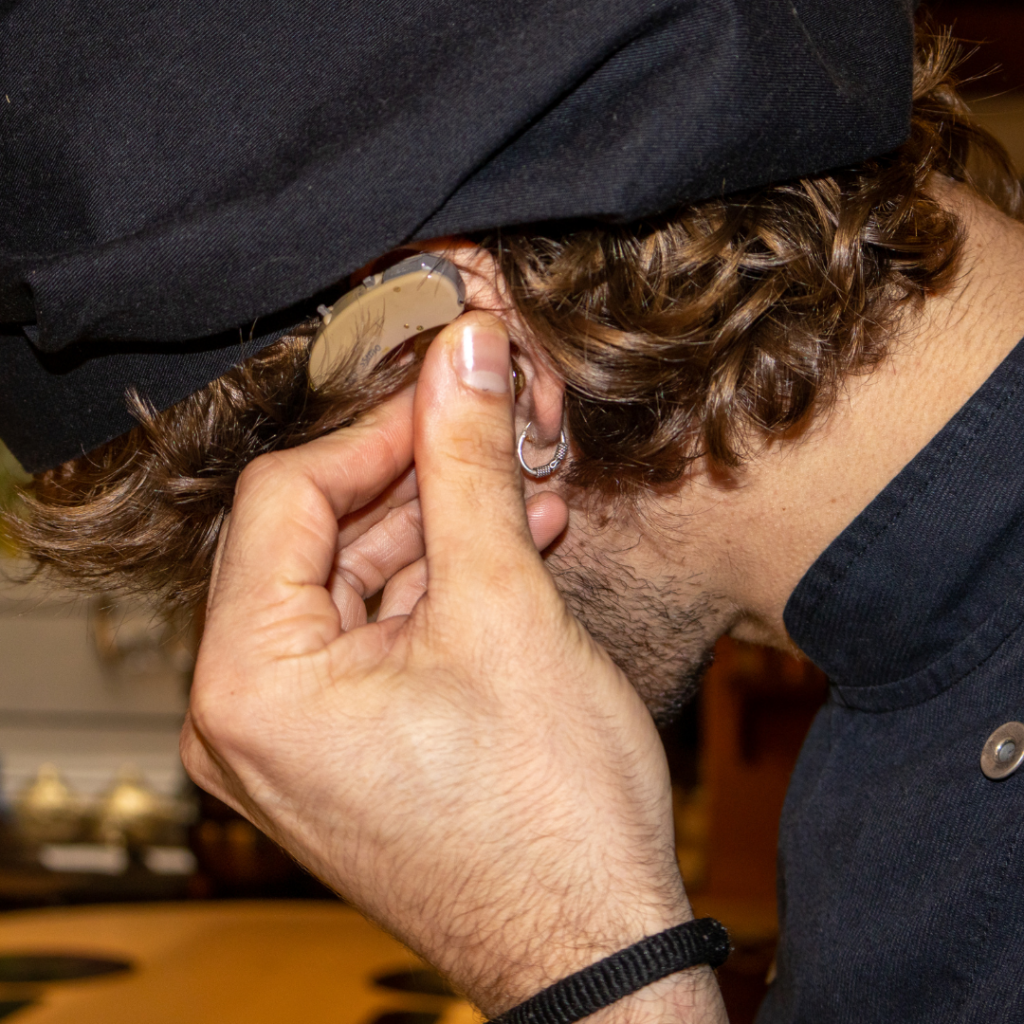
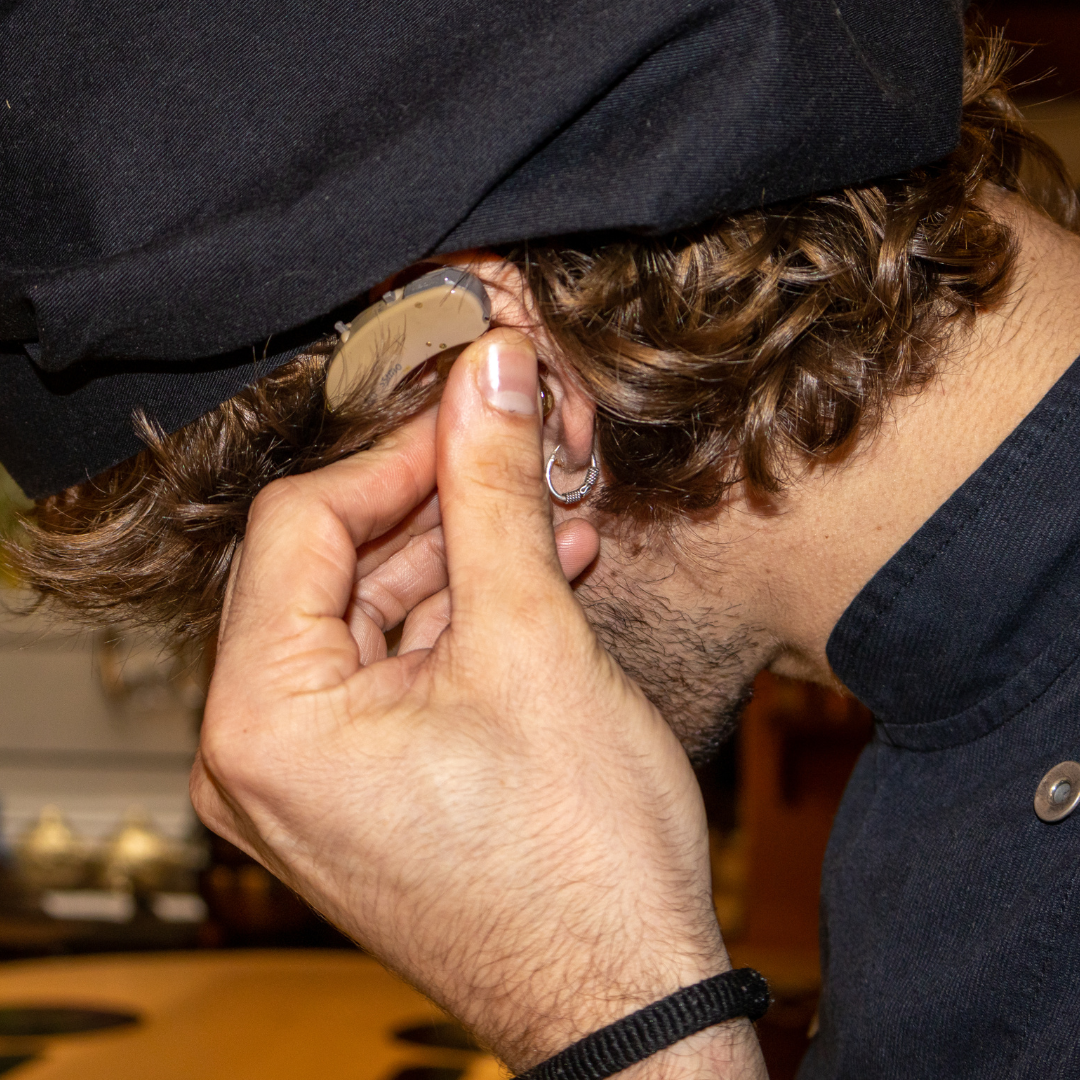
Active restaurant conversations are frequently hard to decipher when surrounding background noise clashes with your hearing. Our specialists can evaluate hearing under both calm and noisy listening conditions to establish why noisy rooms present such difficulty. After uncovering the precise factors driving your difficult hearing, our team helps you select individualized auditory solutions.
Understanding the Contrast Between Quiet Hearing and Restaurant Noise
Calm domestic settings establish a positive signal-to-noise ratio, allowing target speech to stand out clearly from faint background noises. Modern restaurant environments create the complete opposite listening environment. Cross-talk, ambient music, dishware noise, and harsh acoustic reverberation interfere with speech clarity, forcing your brain to labor to extract the target voice.
Such listening challenges typically stem from high-frequency hearing loss, auditory-processing deficits, or accumulated noise-induced trauma. Factors including listening fatigue, poor dining lighting, acoustic distance, and wandering attention make comprehension significantly harder. Numerous individuals show standard hearing thresholds on paper but reveal marked comprehension drops on clinical speech-in-noise testing. Inability to track speech in crowded restaurants merits audiological evaluation even when standard daily hearing sounds completely normal.
Clinical Evaluation of High-Frequency Hearing Loss
We begin with a history of the situations that cause trouble, along with questions about noise exposure, tinnitus, medications, family history, and changes in either ear.
Pure-tone audiometric evaluations measure the absolute quietest sounds audible across specific octave frequencies using air and bone conduction. Sensorineural high-frequency hearing loss demonstrates an audiometric slope reflecting diminished hearing thresholds as sound frequencies climb. Diagnostic evaluations may also integrate acoustic tympanometry to check middle-ear pressure alongside word-recognition testing to evaluate speech processing.
Given that isolated quiet booths do not reflect chaotic restaurant acoustics, specialized speech-in-noise testing delivers invaluable diagnostic data. This procedure gauges speech-discrimination accuracy while competing multi-source noise becomes incrementally louder. Combined, these clinical findings determine whether your symptoms stem from acoustic audibility, word clarity, central noise filtering, or multifactorial causes.
The Role of Central Auditory Processing Disorders in Adults
An auditory processing disorder degrades the central nervous system’s capacity to organize and interpret complex sound inputs. Even when the ears detect individual frequencies accurately, the central auditory system may falter at sorting overlapping voices, distinguishing close speech sounds, or processing fast-paced dialogue. We systematically verify peripheral hearing health before establishing whether an advanced auditory-processing evaluation or medical referral serves your needs.
Practical Strategies for Improving Speech Understanding in Noise
Simple situational adjustments enhance the speech signal entering your ears and offer clearer facial cues. Before dining out, choose a quieter restaurant or visit during an off-peak time. Venues with booths, acoustic panels, curtains, carpeting, and other sound-absorbing features may be easier than open rooms filled with hard surfaces.
When arriving at the dining venue:
- Reserve a table located well away from kitchen doors, active bar counters, overhead speakers, and banquet groups.
- Choose a seat with your back against a solid wall to block acoustic clutter originating from behind.
- Face your speaking partners directly in well-illuminated seating to maximize visual speech cues.
- Reduce physical spacing between yourself and companions to maximize direct speech perception.
- Direct your better-performing ear toward the companion you most need to understand.
- Instruct conversational partners to reword missed phrases instead of repeating the entire sentence verbatim.
- Validate significant pieces of information directly rather than feigning understanding during dialogue.
- Step into a quiet area for a few minutes when listening fatigue begins to compromise focus.
- Invite companions to focus on clear articulation and a measured, comfortable cadence.
- Speaking with excessive volume creates acoustic distortion that fails to make words clearer.
Advanced Technology for Hearing in Background Noise
Selecting the ideal assistive technology depends upon underlying diagnosis, specific acoustic challenges, and verified hearing loss. Prescription hearing aids fitted by an audiologist leverage directional microphone arrays, advanced digital noise reduction, and dedicated restaurant programs to focus on frontal speech while dampening background sound. Realistic expectations are vital, since even advanced hearing devices cannot completely erase background conversational chatter.
Pairing your devices with a remote wireless microphone generates a substantial improvement in the direct signal-to-noise ratio. Positioned near or clipped to the speaker, the device transmits raw speech audio directly to paired hearing aids or external listening receivers. Direct audio routing minimizes the acoustic penalty of conversational distance and surrounding environmental din.
Other useful options include:
- Wireless conference table microphones that capture multi-speaker discussions
- Built-in telecoils linking directly with induction hearing-loop systems in public venues
- Mobile device live-captioning programs and speech-to-text transcription software
- Advanced hearables incorporating assistive directional listening programs
- Sound-meter apps and acoustic dining directories for locating quiet venues
Our team can compare these systems, verify device compatibility with your hearing aids, and provide comprehensive training on their use.
How Can a Doctor Help with Hearing in Loud Places?
A hearing evaluation can move the conversation beyond “I hear fine in quiet.” We analyze the exact social venues, voice registers, and noise environments that cause difficulty to administer tests matching your lifestyle. Clinical evaluation commonly integrates pure-tone audiometric testing, middle-ear analysis, word recognition, and speech-in-noise measures. Auditory-processing testing may be considered when the history and initial results support it.
Hearing changes that present abruptly, affect only one side, or progress rapidly necessitate consultation with an ear, nose, and throat physician. Personalized patient care establishes the true medical source of your listening problems instead of assuming ambient noise is solely responsible.
Book Your Comprehensive Hearing Evaluation Now
When dining out causes you to guess at words, detach from family, or experience severe listening exhaustion, book a comprehensive hearing evaluation with us. We provide proven treatments to enhance your hearing in noisy environments, offering hearing aid fine-tuning, specialized assistive accessories, and individualized auditory therapy.
Get in touch with our hearing care team to request an appointment and rediscover confident, stress-free restaurant conversations.